The Future of Chess: Can AI Ever Solve the Game?
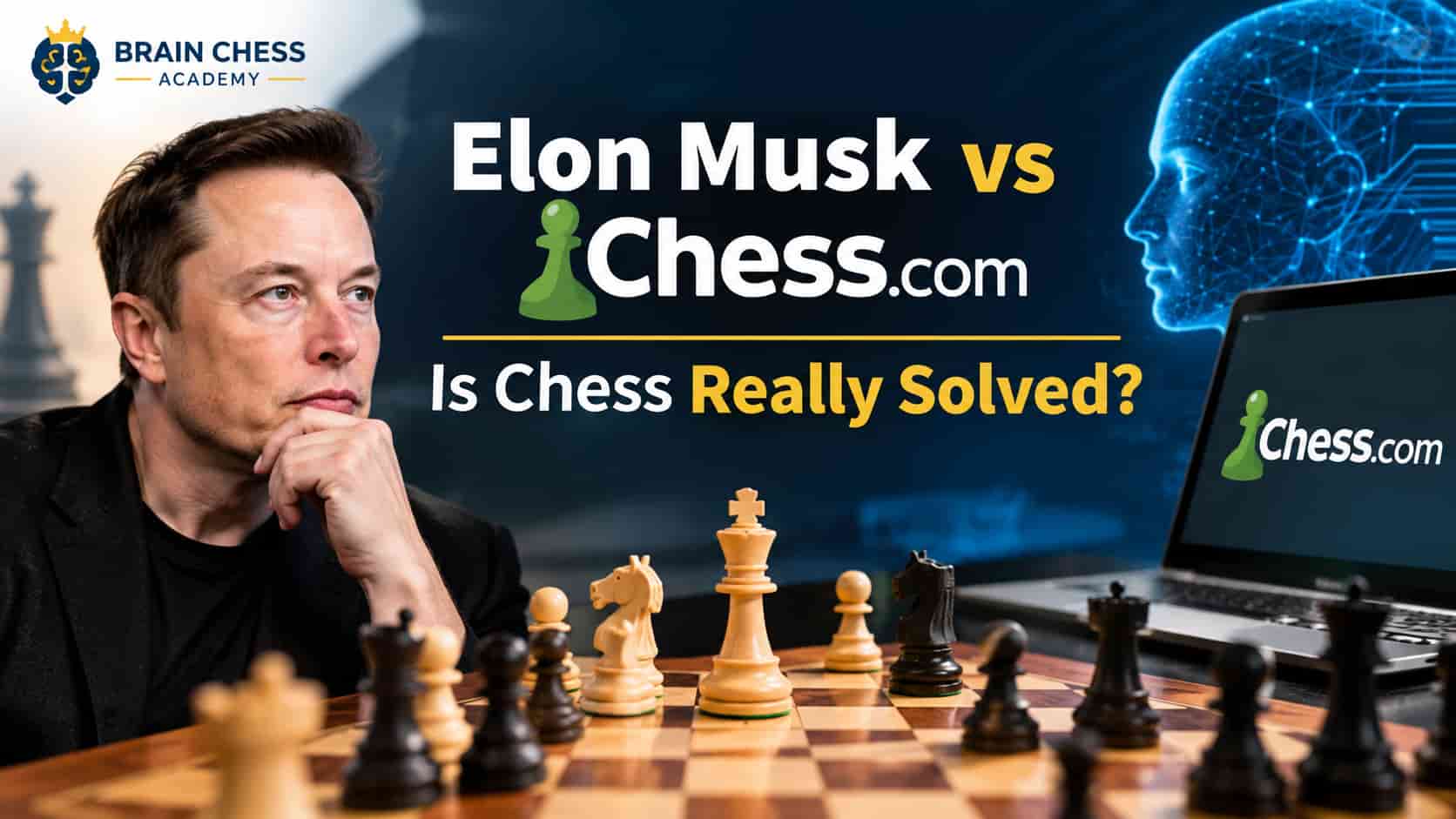
Imagine sitting down with your child for a friendly weekend game of chess, only to have one of the world's most famous tech billionaires declare that the game is practically obsolete. Recently, technology mogul Elon Musk sparked a massive debate across the internet by clashing with Chess.com over whether chess is “solved” or soon-to-be-solved by artificial intelligence (AI). For parents raising children in the digital age, this high-profile debate raises some fascinating and important questions. If computers are now so powerful that they can easily beat the best human players, is there still value in our children learning to play? Does the rise of supercomputers make chess a relic of the past, or is it still the ultimate gym for a child's growing brain?
The Clash: What Elon Musk Said and How the Chess World Responded
The controversy began when Elon Musk shared his thoughts on social media, suggesting that chess is a relatively simple game compared to modern video games or real-world engineering challenges. Musk argued that because modern computer programs can easily defeat any human player, the game of chess is essentially “solved.” He even suggested that complex multi-player video games like Polytopia offer more strategic depth than the traditional 64-square chessboard.
It didn't take long for the global chess community, led by Chess.com (the world's largest online chess platform), to respond. Grandmasters, coaches, and chess enthusiasts quickly pointed out that Musk was confusing two very different concepts: a computer being unbeatable, and a game being mathematically solved. While computers are indeed vastly superior to humans at playing chess, the game itself remains an unsolved mystery with near-infinite possibilities. Chess.com defended the classic game by highlighting its timeless beauty, its cultural importance, and the fact that its complexity still baffles the most advanced neural networks in existence.
What Does It Actually Mean to "Solve" a Game?
To understand why Elon Musk's claim missed the mark, it helps to understand what mathematicians and computer scientists mean when they say a game is “solved.” In game theory, a game is considered fully solved when a computer can calculate every single possible move and outcome from the very first turn. If a game is strongly solved, the computer knows with absolute certainty whether the starting player can force a win, a loss, or a draw, assuming perfect play from both sides.
Here is how different games stack up in the world of computer science:
- Tic-Tac-Toe (Fully Solved): This is a simple game. You probably already know the “solution” yourself. If both players play perfectly, the game will always end in a draw.
- Checkers (Fully Solved): In 2007, after decades of continuous calculation by dozens of computers, checkers was officially solved. Scientists proved that perfect play by both sides leads to a draw. However, checkers has “only” about 500 billion billion possible positions (5 times 10 to the 20th power).
- Chess (Unsolved): Chess is not solved, and it likely never will be. While a computer program (known as a chess engine) can look ahead dozens of moves to find the best possible option, it cannot calculate every single path to the very end of the game.
The Mind-Boggling Math of the Shannon Number
Why is chess so hard to solve? It all comes down to a concept called the Shannon Number, named after mathematician Claude Shannon. In 1950, Shannon calculated the number of possible unique games of chess. The number he came up with is approximately 10 to the power of 120 (written as a 1 followed by 120 zeros).
“There are more possible unique games of chess than there are atoms in the entire observable universe.”
To put this in perspective, scientists estimate that there are about 10 to the power of 80 atoms in the universe. That means the number of chess variations is vastly larger than every single atom in every star, planet, and galaxy we can see. Even if we turned every atom in the universe into a supercomputer and let them run for billions of years, they still could not calculate every possible chess game. This is why chess is not solved, and why it remains endlessly creative and exciting for children and adults alike.
The Car Analogy: Why AI Dominance Doesn't Ruin the Game
A common concern for parents is: “If a free app on my phone can beat the human World Chess Champion, why should my child spend hours practicing?”
To answer this, we can use a simple analogy: cars and running. A basic family sedan can easily drive faster than Usain Bolt, the fastest human runner in history. Does the existence of cars mean that human running races are pointless? Of course not! We still watch the Olympic Games, and we still encourage our children to run, play sports, and stay active. We do this because the value of running is found in the human effort, the physical health benefits, and the joy of competition.
The same is true for chess. When your child plays chess, they are not competing against the absolute limit of silicon-based computing power. They are engaging in a beautiful, creative struggle against another human mind. The fact that a supercomputer can play perfectly does not take away from the thrill of a child finding a clever checkmate or defending a difficult position on their own.
Why Chess is More Important for Kids Today Than Ever Before
In a world dominated by short-form videos, instant gratification, and artificial intelligence, chess is actually the perfect antidote. It offers unique cognitive and emotional benefits that video games simply cannot match. Here is why learning chess is incredibly valuable for children aged 6 to 14:
1. Developing Deep Focus and Attention Span
Modern technology is designed to capture and split our children's attention. Chess does the exact opposite. To play a game of chess, a child must sit, concentrate, and focus on a single problem for an extended period. This deep focus acts as a workout for the prefrontal cortex, the part of the brain responsible for planning, self-control, and decision-making.
2. Building Emotional Resilience and Grit
In chess, there is no luck. If you make a mistake, you cannot blame a teammate, a bad dice roll, or a glitch in the game. This teaches children personal responsibility. More importantly, losing a game of chess teaches kids how to handle setbacks with grace, analyze their mistakes, and come back stronger—a quality psychologists call grit.
3. Boosting Critical Thinking and Spatial Reasoning
Before making a move, a chess player must ask themselves: “If I move here, what will my opponent do? And what will I do next?” This process of visualization and logical reasoning helps children develop strong critical-thinking skills that transfer directly to mathematics, science, and everyday problem-solving.
How to Use Chess Technology Wisely: Actionable Advice for Parents
While we don't want computers to take over the joy of the game, technology can be an incredible tool for learning when used correctly. At Brain Chess Academy, our FIDE-rated coaches (coaches certified by the International Chess Federation) teach children how to use technology as a helpful guide rather than a crutch. Here are a few ways you can help your child balance technology and traditional learning:
- Limit Engine Use for Beginners: When children are first learning, they should avoid using chess engines to analyze their games immediately. Instead, encourage them to review their games with a human coach or parent first, relying on their own memory and reasoning.
- Focus on Human-to-Human Play: While playing against bots online can be fun, playing against other children of a similar skill level is far more beneficial for social development and emotional growth.
- Emphasize the “Why” Over the “What”: A computer program can tell you that a move is a mistake, but it cannot explain the human concept behind the mistake. Working with an experienced coach helps children understand the strategic ideas, pawn structures, and plans that make chess so rich.
The Human Element: Why FIDE-Rated Coaches Make the Difference
The debate between Elon Musk and Chess.com reminds us of an important truth: chess is not just a math problem to be solved. It is a human art form, a social activity, and a tool for personal growth. A computer engine might know the best move in a fraction of a second, but it cannot inspire a child, celebrate their breakthroughs, or gently encourage them after a tough loss.
That is where professional coaching comes in. FIDE-rated coaches do not just teach moves; they mentor young minds. They break down complex strategic concepts into friendly, jargon-free lessons that children can easily understand and apply. By blending the best of modern chess technology with warm, human-centered instruction, we help children build a lifelong love for learning.
Whether chess is eventually solved by a supercomputer in some distant future doesn't matter on the board today. For your child, the journey of learning chess is about discovering their own potential, mastering focus, and having fun along the way.
Ready to introduce your child to the timeless world of chess? Let our friendly, expert coaches guide them on their journey. Book a free demo class today at Brain Chess Academy and watch your child's confidence and concentration soar!
Leave a Comment
Your email will not be published. All comments are moderated before appearing.