What Is a Pin in Chess? A Complete Beginner’s Guide
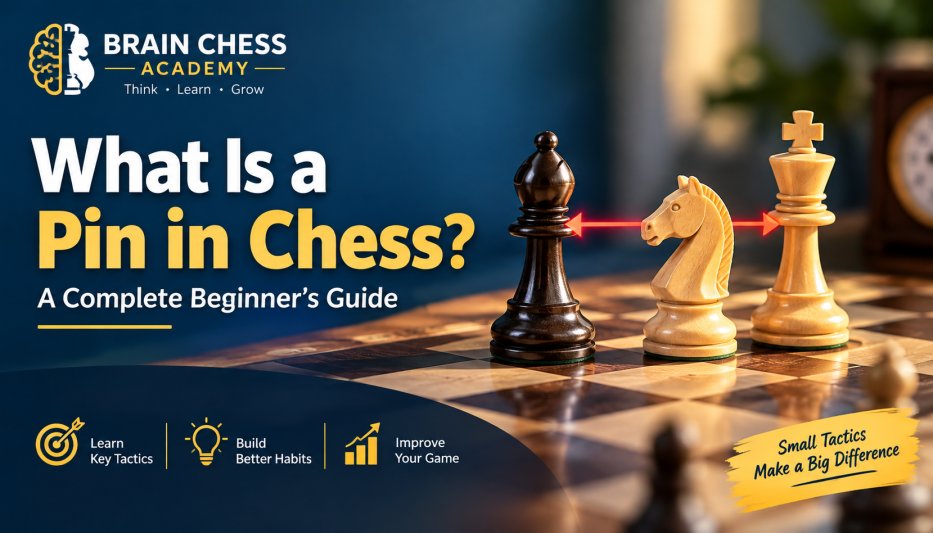
A pin occurs when a piece is attacked and cannot safely move because another, more important piece is positioned directly behind it. The attacking piece is usually a bishop, rook, or queen. The pinned piece may be a knight, bishop, rook, or another piece. For example, imagine a bishop attacking a knight. Behind that knight is the opponent's king. If the knight moves away, the bishop would have a direct line to the king. The knight is therefore pinned to the king. This is a powerful tactical situation because the pinned piece has very limited freedom.
Absolute Pin vs. Relative Pin
![The Pin Tactic in Chess Explained by a Grandmaster [For Beginners]](https://images.openai.com/static-rsc-4/CI2H-1ruqVisvDjYF_LlCxyLhGzvauZk4ibfBdS8gGZ4XKUrf4c-BiUBfsH5Bwl2y66dELtRUt-9eJ4q-Lq61G2JxVrqJOFFsdQZMp7UbzskEAsI511eCs_7kDBXWdiEcRfmDTzraRUo_uqPjuilCb86r2ktnazYFs4F8wI5iPcRWTkeFDtESmyZkW-Wm5ng?purpose=fullsize)
There are two main types of pins that beginners should know.
1. Absolute Pin
An absolute pin happens when the piece in front is protecting the king. If that piece moves, the king would be exposed to attack. Since a player cannot legally leave their king in check, the pinned piece cannot move. For example, imagine a bishop attacking a knight with the opponent's king directly behind the knight. The knight is absolutely pinned to the king. This type of pin is especially powerful because the pinned piece is legally unable to move if doing so would expose the king.
2. Relative Pin
A relative pin occurs when the valuable piece behind the pinned piece is something other than the king. For example, imagine a rook attacking a knight with the opponent's queen behind it. The knight may technically move, but doing so could expose the queen to capture. The player can move the knight, but doing so may lose valuable material. This is called a relative pin because the pinned piece is not legally restricted—it is simply dangerous to move.
Pins usually take advantage of line pieces. Bishops attack along diagonals, while rooks attack along ranks and files. Queens can use both types of lines. The basic structure is:

Attacking piece → Pinned piece → Valuable piece
The attacking piece puts pressure through the middle piece toward the valuable piece. The important question to ask during a game is: “If this piece moves, what is behind it?” This simple question can help you spot many tactical opportunities.

Why Are Pins Important in Chess?
Pins are important because they can make an apparently active enemy piece almost useless. Suppose your bishop pins an opponent's knight to their king. The knight may normally be able to move to several useful squares, but the pin prevents it from escaping safely. This can allow you to win a piece, attack the pinned piece, control important squares, create a check, improve your position, or launch a combination. A pin can also be used as part of a larger tactical sequence. For example, you might first pin a knight and then attack it with a pawn or another piece. Because the knight cannot easily move, your opponent may have difficulty defending it.
How to Find Pins During Your Chess Game
You do not need to calculate dozens of moves to start finding pins. Use this simple checklist.
Step 1: Look for line attacks. Check your bishops, rooks, and queen. Ask yourself whether an enemy piece is standing between your attacking piece and something valuable.
Step 2: Look behind the piece. Is there a king, queen, rook, or another valuable piece behind it?
Step 3: Ask whether the piece can move. If moving exposes the king, you have an absolute pin. If moving exposes another valuable piece, you may have a relative pin.
Step 4: Look for a way to increase pressure. Once you identify a pin, consider attacking the pinned piece again. This is often how players turn a positional advantage into a material gain.
Common Beginner Mistake: Assuming Every Pin Wins Material
A pin does not automatically mean that you can win the pinned piece. Your opponent may be able to move the valuable piece behind it, break the pin, attack your pinning piece, add another defender, or create a counterattack somewhere else. So after finding a pin, always ask: “What happens next?” This habit is essential for improving your calculation skills.
Practice Pins to Improve Your Chess

The best way to learn pins is through practice. When solving chess puzzles, don't only look for checks and captures. Look for pieces lined up behind one another. Try asking: Can I pin an enemy piece? Is my opponent pinning one of my pieces? Is the king behind the piece? Can I attack a pinned piece again? Can I use the pin to win material?
With regular practice, spotting pins becomes much faster. At Brain Chess Academy, our chess training focuses on understanding tactical patterns such as pins, forks, skewers, discovered attacks, and double attacks. Once students understand these ideas, they can begin recognizing them naturally during real games.
Final Thoughts
A pin in chess is a tactical pattern where a piece cannot safely move because doing so would expose a more valuable piece behind it. The most important distinction is between an absolute pin, where the king is behind the pinned piece, and a relative pin, where another valuable piece is behind it. Start by looking for pieces lined up on the same rank, file, or diagonal. Then check what is behind the potential target. The more puzzles you solve, the easier these patterns will become to recognize. Learn the pattern. Understand the idea. Then use the pin in your own games.
SEO Title: What Is a Pin in Chess? Beginner's Guide to Chess Pins
Meta Description: Learn what a pin in chess is, how absolute and relative pins work, and how beginners can spot and use this powerful chess tactic.

Leave a Comment
Your email will not be published. All comments are moderated before appearing.